
Medically Reviewed by Dr. Kevin Freeman, DDS on September 2, 2026
Whether your tooth has suffered severe decay or trauma, or overcrowding threatens your smile’s alignment, extraction might be the best way to restore your oral health and confidence. The tooth extraction procedure, while often anxiety-inducing for patients, is a carefully controlled intervention designed to preserve the integrity of your surrounding teeth and jawbone while preventing more serious complications down the line, making it beneficial for patients who need it.
At Brilliant Dental Care, Dr. Kevin Freeman and our experienced team understand that tooth extraction is never a first choice, but when necessary, we approach it with the precision and care you deserve. Using advanced digital technology and proven techniques refined over decades of practice, we make the process as comfortable as possible while setting the stage for optimal healing and future restorative options.
When Does Tooth Extraction Become Necessary?
We recommend tooth removal only when preservation is no longer viable or when keeping the tooth poses greater risks to your overall oral health. Severe decay that has destroyed too much of the tooth structure to support a restoration, advanced periodontal disease that has compromised the supporting bone, or infections that don’t respond to root canal therapy all represent common scenarios where extraction offers the best solution.
Trauma from accidents, impacted wisdom teeth causing pain or alignment issues, or overcrowding that interferes with orthodontic treatment plans also warrant consideration of removal. Dr. Freeman carefully evaluates each situation to determine whether extraction truly serves your best interests, always exploring conservative treatment options first before recommending tooth removal.
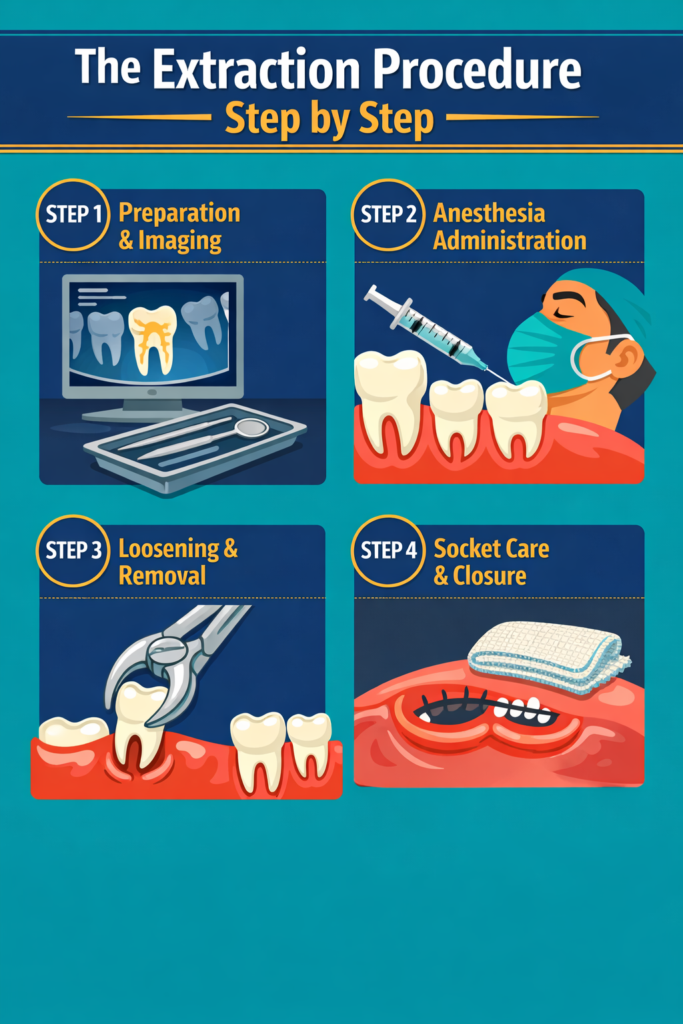
The Extraction Procedure Step by Step
Understanding what happens during your appointment can help ease anxiety about the process. We carefully perform each step to ensure your comfort and safety throughout the procedure.
Step 1: Preparation and Imaging
Your extraction begins with a comprehensive examination where Dr. Freeman reviews your dental and medical history. Using our advanced digital X-rays and CBCT scans, we create a detailed view of the tooth’s position, root structure, and relationship to surrounding tissues. This imaging allows us to plan the most efficient and safest approach for your specific case.
Step 2: Anesthesia Administration
Before beginning the extraction, Dr. Freeman administers local anesthesia to completely numb the area around the tooth. You’ll feel a brief pinch as the anesthetic is delivered, but within minutes, the entire region becomes numb. For patients with dental anxiety or for more complex surgical extractions, we offer sedation options to help you remain comfortable and relaxed throughout the procedure.
Step 3: Tooth Loosening and Removal
For simple extractions, Dr. Freeman uses specialized instruments called elevators to gently rock the tooth back and forth, widening the socket. Once sufficiently loosened, forceps grasp the tooth and remove it in a controlled motion. Surgical extractions require a small incision in the gum tissue and, if necessary, sectioning the tooth into smaller pieces for easier removal.
Step 4: Socket Care and Closure
Once the tooth is removed, we thoroughly clean the socket to remove any debris or infected tissue. A blood clot begins forming immediately, which is essential for proper healing. We place sterile gauze over the extraction site and may use dissolvable stitches if necessary to close the gum tissue, particularly after surgical extractions. You’ll bite down gently on the gauze to help control bleeding and support clot formation.
Tooth Extraction Recovery and What to Expect
Research published by the National Institutes of Health explains that extraction socket healing progresses through distinct stages, beginning immediately after tooth removal. The days following your extraction involve gradual healing as your body naturally fills the socket with new bone tissue. Most patients experience manageable discomfort, controlled with over-the-counter or prescribed pain medication, along with some swelling that responds well to external cold compresses.
Following your prescribed diet, which typically begins with soft foods and progresses as healing allows, supports proper recovery while protecting the extraction site. Maintaining oral hygiene remains important, but avoid brushing directly around the extraction site for the first 24 hours.
Gentle rinsing with warm salt water after the first day helps keep the area clean without disrupting the healing blood clot. Most patients return to normal activities within a few days, though complete healing of the underlying bone structure takes several weeks to months, depending on the complexity of the extraction.
Recognizing Dry Socket and Other Complications
Most extractions heal without incident, but it helps to know the warning signs of a problem. Dry socket occurs when the protective blood clot dislodges or dissolves too early, exposing the underlying bone and nerves. It typically develops two to four days after extraction and causes a throbbing pain that can radiate to the ear or jaw, often with a noticeably empty-looking socket and an unpleasant taste or odor. Smoking, using a straw, and vigorous rinsing in the first 24 hours all raise the risk, which is why we ask patients to avoid them during initial healing.
Signs that call for a call to our office include pain that worsens after the third day instead of improving, fever, pus or discharge from the socket, or bleeding that does not slow with gauze pressure. Dry socket and infection are both very treatable when addressed promptly, so it is always better to check in than to wait it out.
Planning for Tooth Replacement
One of the most important steps you can take after a tooth extraction is thinking ahead about how to fill the gap left behind. An empty space in your mouth does more than affect the way your smile looks. Over time, the surrounding teeth can shift out of alignment, your bite may change, and the jawbone beneath the extraction site can begin to lose density. Addressing replacement sooner rather than later helps preserve your oral health and keeps future treatment options open.
Dental implants are widely considered the most reliable long-term solution because the titanium post fuses with your jawbone, providing the stimulation it needs to maintain strength and density. A dental bridge offers a non-surgical alternative, using crowns on neighboring teeth to anchor an artificial tooth in the gap. For patients missing several teeth, dentures provide a removable, budget-friendly option that restores both appearance and everyday function. Our team can walk you through each path and help you choose the one that fits your smile goals and lifestyle.
Schedule Your Consultation for a Tooth Extraction at Brilliant Dental Care
If you’re experiencing dental pain, have received a recommendation for extraction, or simply want to explore your options, our trusted team is here to provide expert guidance tailored to your unique situation. Dr. Freeman’s advanced training and commitment to staying current with the latest techniques mean you receive care that prioritizes both your immediate comfort and long-term oral health.
Whether you need a simple extraction or a more complex surgical procedure, we use state-of-the-art technology, including digital CBCT scans and digital X-rays, to plan your treatment with precision. Contact our Houston office today to schedule your consultation and take the first step toward resolving your dental concerns with confidence.
Frequently Asked Questions About Tooth Extractions
How long does a tooth extraction procedure take?
A simple extraction often takes about 20 to 40 minutes, while a surgical extraction involving an incision or tooth sectioning can take longer. The exact time depends on the tooth’s position, root structure, and whether any complications arise during the procedure.
How do I know if I have dry socket after an extraction?
Dry socket typically causes throbbing pain that develops two to four days after extraction, sometimes radiating to the ear or jaw, along with an empty-looking socket or an unpleasant taste. If pain worsens instead of improving after the third day, contact our office promptly.
How soon after an extraction should I replace the missing tooth?
It is worth discussing replacement options during your extraction consultation, since waiting too long can allow neighboring teeth to shift and the jawbone to lose density. Dental implants, bridges, and dentures each have different timelines depending on your healing and treatment plan.
What foods should I avoid after a tooth extraction?
Stick to soft foods for the first few days and avoid using a straw, since the suction can dislodge the healing blood clot and increase the risk of dry socket. Gradually reintroduce firmer foods as your comfort level and healing allow.
About the Author
General Dentist, Brilliant Dental Care
Dr. Kevin Freeman is a graduate of Indiana University School of Dentistry who has practiced in Houston for over two decades, using advanced digital imaging and proven techniques to make extractions as comfortable as possible for his patients.