Wisdom teeth are the last set of molars to come in, typically appearing in the late teens or early twenties. For many people, there simply is not enough room in the jaw for these teeth to emerge properly, and that lack of space can lead to pain, crowding, infection, and damage to neighboring teeth. The good news is that wisdom tooth removal is one of the most common dental procedures performed today, and with the right team, recovery is very manageable.
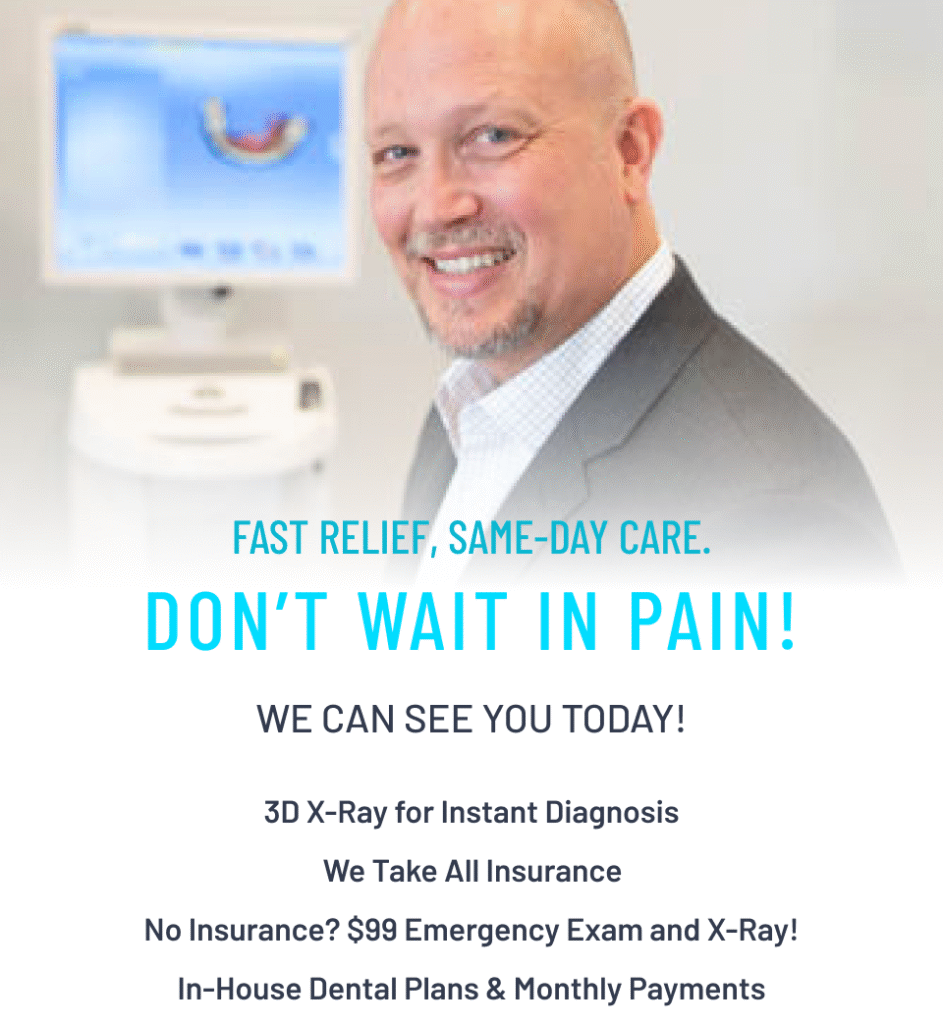
At Brilliant Dental Care, we perform wisdom teeth removal as part of our general dentistry care. Dr. Kevin M. Freeman uses digital imaging, including our CBCT cone beam technology, to fully assess the position of your wisdom teeth before making any recommendations, so you always have a clear picture of what is happening and why treatment may be needed.
When Removal Is Recommended
Not every wisdom tooth needs to come out. When they emerge properly and do not cause any issues, they can often be monitored and left in place. However, removal is commonly recommended when one or more of the following situations are present:
- The wisdom tooth is impacted, meaning it is stuck beneath the gumline and cannot fully emerge
- There is not enough room in the jaw, causing pressure or crowding against adjacent teeth
- The tooth is coming in at an angle that puts nearby molars at risk
- Repeated infections or gum inflammation are occurring in the area around the tooth
- A cyst or other tissue abnormality has developed near the impacted tooth
Catching these issues early often leads to a simpler procedure and a smoother recovery. That is why we monitor wisdom teeth during your regular dental exams and cleanings and flag any concerns as soon as they appear.
What to Expect During the Procedure
Wisdom tooth removal is typically performed under local anesthesia, and we also offer sedation dentistry for patients who prefer a more relaxed experience. Once you are comfortable, Dr. Freeman will remove the tooth, which may involve making a small incision if it is impacted beneath the gumline. The area is then cleaned and sutured if needed.
Most patients go home the same day and are back to a modified routine within a few days. According to a 2023 update published on the National Institutes of Health’s Bookshelf, wisdom teeth are generally only removed when they cause or are likely to cause problems, which aligns with how we approach each case here: carefully, and with your long-term oral health in mind.
Recovery Tips
Recovery from wisdom tooth removal is usually straightforward when you follow a few basic guidelines. Resting for the first day or two, avoiding hard or crunchy foods, keeping the area clean, and not using straws for the first several days all help the healing process go smoothly. Our team will provide you with specific post-operative instructions and is available to answer questions during your recovery.
If you have had a tooth extraction in the past, the process will feel familiar. Wisdom tooth removal follows the same general principles, though impacted cases may require a slightly longer healing window.
Wisdom Teeth Removal at Brilliant Dental Care
At Brilliant Dental Care, we take a thoughtful approach to wisdom tooth removal. Dr. Freeman evaluates each case individually, using precise imaging to understand exactly where your wisdom teeth are and what risks they may pose. We never recommend extraction without a solid clinical reason, and we always walk you through your options so you feel informed and comfortable before any procedure begins.
We understand that cost is a real consideration for many patients, and we offer several ways to make treatment affordable. Our Smile Advantage Plan, along with CareCredit, Cherry, and SunBit financing, helps you move forward with care without putting it off. Contact our Houston office to schedule an evaluation and find out whether your wisdom teeth need attention.
How much do clear aligners cost?
Clear aligner treatment typically costs between $3,000 and $7,000, depending on case complexity and treatment duration. Simple cases requiring minor adjustments may cost less, while complex alignments involving significant tooth movement fall toward the higher end. At Brilliant Dental Care, we offer a complimentary clear aligner consultation to evaluate your needs and provide accurate pricing. We accept most insurance plans with orthodontic benefits and offer financing through CareCredit and SunBit, plus our In-House Smile Advantage Plan, making straighter teeth accessible for Greater Heights patients at various budget levels.
How long does clear aligner treatment take?
Clear aligner treatment typically takes 12 to 18 months for most patients, though simple cases may be completed in as little as 6 months, while more complex alignments can take up to 24 months. Treatment duration depends on the severity of misalignment and how consistently you wear your aligners. For optimal results, you must wear your clear aligners 20 to 22 hours daily, removing them only for eating, drinking anything other than water, and brushing. Dr. Freeman monitors your progress during regular checkups every 6 to 8 weeks throughout your treatment.
Are clear aligners as effective as braces?
Clear aligners effectively treat most orthodontic issues, including crowding, spacing, overbites, underbites, and crossbites, achieving results comparable to traditional braces for mild to moderate cases. Modern aligner technology has advanced significantly, handling increasingly complex tooth movements with predictable outcomes. However, severe malocclusions or cases requiring significant vertical movement may still benefit from traditional braces. During your complimentary consultation at Brilliant Dental Care, Dr. Freeman evaluates your specific alignment issues and recommends whether clear aligners will achieve your desired results or if alternative treatment is needed.
Can I eat and drink with clear aligners?
You must remove your clear aligners before eating or drinking anything other than water. This protects the aligners from staining, warping, or damage and prevents food particles from becoming trapped against your teeth. After eating, brush your teeth before reinserting your aligners to maintain optimal oral hygiene and prevent cavities. This removable feature is actually a major advantage over traditional braces, as you can enjoy all your favorite foods without restrictions and maintain your normal brushing and flossing routine throughout treatment.
Will clear aligners affect my speech?
Some patients experience a slight lisp or minor speech changes during the first few days of wearing clear aligners as their tongue adjusts to the new appliances. This adjustment period is typically brief, with most patients speaking normally within one to two weeks. The aligners are designed to fit snugly against your teeth with minimal bulk, making them far less noticeable than traditional braces. Many Greater Heights professionals choose clear aligners specifically because they can maintain their normal speech patterns and professional appearance throughout orthodontic treatment.