
Medically Reviewed by Dr. Kevin Freeman, DDS on September 9, 2026
Composite and porcelain veneers both cover the front surface of a tooth to correct chips, stains, gaps, or uneven edges, but the material changes nearly everything else about the experience. Composite veneers are sculpted directly onto your tooth in a single visit and cost less upfront, while porcelain veneers are custom fabricated in a dental lab, resist stains longer, and typically last more than twice as long. The right choice comes down to your timeline, your budget, and how long you want your results to last.
At Brilliant Dental Care, Dr. Kevin Freeman and the team have helped countless Houston patients weigh exactly this decision. As a practice built around cosmetic dentistry, we take the time to walk you through every option so that whichever material you choose, it is the right fit for your smile, your habits, and your goals.
What Are Dental Veneers?
Before comparing the two materials, it helps to understand what veneers actually do. A veneer is a thin covering placed over the front surface of a tooth to improve its appearance. According to the American Dental Association, veneers can address teeth that are chipped, stained, or misshapen, and they differ from crowns because they cover only the front surface rather than the entire tooth structure.
Both composite and porcelain veneers accomplish this same fundamental goal. The material used, however, changes nearly everything about the experience, from how many appointments you need to how long your results will last.
How Composite Veneers Work
Composite veneers offer a streamlined path to improving your smile, often completing the process in a single visit. Here is a closer look at what the procedure involves and what to expect over time.
The Direct Application Process
Composite veneers are made from the same tooth-colored resin material used in composite bonding. In most cases, the entire procedure is completed in one appointment. Your dentist sculpts the resin directly onto the tooth surface, layer by layer, shaping it to the desired form before hardening it with a curing light. The tooth requires minimal preparation, meaning less enamel is typically removed compared to porcelain veneers.
What to Expect Over Time
Composite veneers are an accessible entry point for smile enhancement, but they do come with trade-offs. They are more prone to staining and wear over time, and they typically last between five and seven years before requiring touch-ups or replacement. On the positive side, they are easier to repair if chipped, and their lower cost makes them a strong option for patients who want visible results without a significant upfront investment.
How Porcelain Veneers Work
Porcelain veneers are crafted with precision and designed for patients who want long-lasting, remarkably lifelike results. Understanding the process and the material’s strengths helps explain why they are widely considered the premium choice.
The Lab-Crafted Process
Porcelain veneers are custom-made ceramic shells fabricated in a dental lab to precisely match the shape, size, and color of your natural teeth. The process requires at least two appointments: the first to prepare the tooth and take impressions, and the second to bond the finished veneer in place. A small amount of enamel is removed from the tooth surface to allow the veneer to sit flush and natural-looking.
Durability and Appearance
Porcelain closely mimics how natural enamel reflects light, producing results that are remarkably lifelike. Porcelain veneers are also far more resistant to staining than composite veneers and, with proper care, can last 10 to 15 years or longer. For patients pursuing a full smile makeover or a significant aesthetic transformation, porcelain is typically the recommended choice.
How Much Do Veneers Cost?
Cost is often the deciding factor between composite and porcelain veneers. Composite veneers typically range from about $250 to $1,500 per tooth, while porcelain veneers generally run from $900 to $2,500 per tooth, depending on the number of teeth involved, the complexity of your case, and the lab used to fabricate the final restoration.
Because veneers are considered a cosmetic treatment, most dental insurance plans do not cover them unless a specific tooth needs restoration for functional reasons. Our team can walk you through financing and payment options during your consultation so you can plan for the investment with confidence before committing to treatment.
Comparing the Two: Key Differences at a Glance
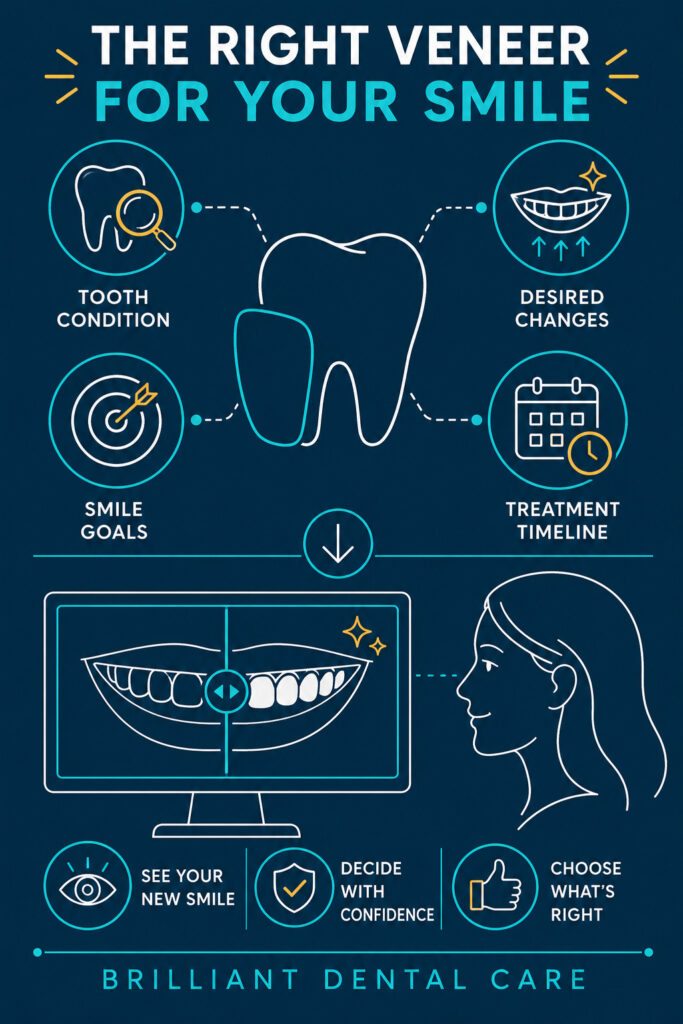
When patients sit down with Dr. Freeman to talk through their options, a few key factors consistently shape the conversation. Here is a quick summary of what sets the two materials apart:
- Cost: Composite veneers are generally more affordable per tooth than porcelain veneers, making them accessible to patients with tighter budgets.
- Appointments: Composite veneers are often completed in one visit, while porcelain veneers require at least two appointments due to the lab fabrication process.
- Longevity: Porcelain veneers typically outlast composite by a wide margin, often lasting more than a decade with good care.
- Repairability: Composite veneers are easier to repair chairside; porcelain veneers, while highly durable, are more difficult to patch if chipped.
- Aesthetics: Porcelain more closely resembles the translucency of natural enamel and resists staining more effectively over time.
Neither option is universally better, since the right choice depends entirely on your goals, your timeline, and what you hope to achieve with your smile.
Caring for Your Veneers
Whichever material you choose, a few daily habits protect your investment. Continue brushing twice a day with a fluoride toothpaste and cleaning between your teeth daily, since veneers can still allow decay to develop at the gumline. Avoid biting your fingernails or chewing on hard objects such as ice or pen caps, and wear a mouthguard for sports or any activity that could chip a veneer. Coffee, tea, and red wine can gradually dull composite veneers more than porcelain, so patients who enjoy professional teeth whitening alongside their veneers often find it easier to keep their whole smile looking consistent.
Which Option Is Right for You?
The answer to that question starts with a conversation. Factors like the current condition of your teeth, the extent of the cosmetic changes you want, and your long-term plans for your smile all play a role in the recommendation. At Brilliant Dental Care, digital smile design technology allows Dr. Freeman to show you a preview of your potential results before any treatment begins, taking much of the guesswork out of the decision. Whether you are exploring veneers for the first time or ready to move forward, that kind of visual clarity makes a real difference.
Alternatives Worth Discussing
Veneers are not the only path to a straighter, brighter smile. Patients with more heavily damaged or decayed teeth sometimes need dental crowns instead, since crowns cover the entire tooth rather than just the front surface. If you are still deciding whether your case calls for composite, porcelain, or another approach entirely, our guide on the signs you may be a good candidate for porcelain veneers can help you narrow down your options before your consultation.
Personalized Veneer Planning at Brilliant Dental Care
Choosing between composite and porcelain is easier with a clear picture of your own teeth, not just general guidelines. During your consultation, Dr. Freeman examines the condition of your enamel, discusses your budget and timeline, and talks through how daily habits such as teeth grinding or a fondness for coffee might affect the lifespan of each option. Because Brilliant Dental Care is a general dentistry practice as well as a cosmetic one, any underlying issues like gum disease or a cavity along the gumline are addressed before cosmetic work begins, which protects your investment and your oral health together. For patients who want to see their results before committing to treatment, digital smile design technology previews your new smile on screen so you can compare a composite finish against a porcelain one and decide with confidence.
Explore Your Veneer Options at Brilliant Dental Care
Dr. Kevin Freeman has spent more than two decades helping Houston patients transform chipped, stained, and uneven smiles into ones they are proud to share, and his practice combines that experience with in-house digital smile design, CEREC same-day dentistry, and a genuine commitment to patient-centered care.
Whether you are leaning toward the convenience of composite or the lasting beauty of porcelain, our team is ready to help you find the right fit for your smile and your life. Contact Brilliant Dental Care today to schedule your consultation and start building the smile you have always wanted.
Frequently Asked Questions About Composite and Porcelain Veneers
How long do composite veneers last compared to porcelain veneers?
Composite veneers generally last five to seven years before they need touch-ups or replacement, while porcelain veneers typically last ten to fifteen years or longer with proper care. Porcelain resists staining and wear better over time, which is why it tends to hold up longer despite its higher upfront cost.
Can I switch from composite veneers to porcelain veneers later?
Yes, many patients start with composite veneers to test how they feel about the look and function of veneers before investing in porcelain. Because composite veneers require less enamel removal, they leave more of your natural tooth structure intact if you later decide to upgrade to a lab made porcelain veneer.
Do veneers hurt or require anesthesia?
Most patients feel little to no discomfort during veneer preparation, and a local anesthetic is typically used for porcelain veneers to keep you comfortable while enamel is removed. Composite veneers usually require less numbing since the process involves minimal tooth preparation.
Are veneers covered by dental insurance?
Veneers are generally considered a cosmetic treatment, so most dental insurance plans do not cover them unless a specific tooth needs restoration for functional reasons. Our team can review financing options with you so the cost fits your budget.
Will veneers look and feel like my natural teeth?
Both composite and porcelain veneers are designed to match the shape, size, and shade of your surrounding teeth, though porcelain typically achieves a more natural translucency. Once bonded, most patients say their veneers feel just like their natural teeth within a few days.

About the Author
Founder, Brilliant Dental Care
Dr. Freeman is a graduate of Indiana University School of Dentistry who completed his post-doctoral residency at UTHealth Houston. He has practiced cosmetic and restorative dentistry in Houston since 2000 and is CEREC certified and GentleWave trained.